
France is one of those countries that can look a little intimidating before the trip starts.
There are big cities, small villages, busy train stations, different types of transport, a language that may be unfamiliar, and so many places to choose from that planning can become confusing.
But once the trip is broken into smaller pieces, France becomes much easier to understand.
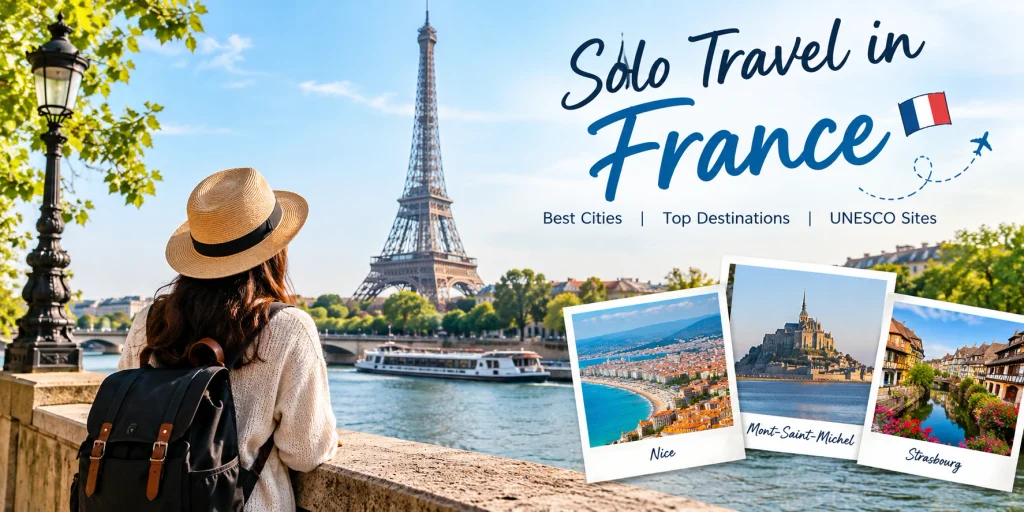
Solo travel in France can be a great choice for someone who wants a mixture of history, food, beautiful streets, museums, beaches, mountains, and relaxed days. The country also works well for different travel styles. A first-time solo traveller can spend a few days in Paris, while someone looking for a quieter journey can head toward Annecy, Alsace, Provence, or the French Riviera.
The important thing is not to treat France like a checklist.
There is no need to see ten cities in one week. In fact, moving too quickly can take away some of the best parts of travelling alone. A slow morning at a café, an afternoon walking through an old neighbourhood, or an unexpected stop at a small bakery can become more memorable than another famous attraction.
This guide covers the practical side of travelling alone in France, including where to go, how to move around, what to expect, safety, food, accommodation, and a few itinerary ideas.
Is France Good for Solo Travel?
Yes, France can be a very good destination for solo travellers.
The biggest advantage is variety. A single trip can include a huge city, a coastal town, a historic village and a mountain destination without leaving the country.
France also has an extensive public transport network. Trains connect many major destinations, while local buses, trams and metro systems make getting around cities relatively straightforward.
Another advantage is that eating alone is not unusual.
A person sitting alone with a coffee or having lunch at a small restaurant does not automatically attract attention. This makes solo dining much less awkward than some new travellers expect.
There are still challenges.
Paris can feel overwhelming, especially during the first couple of days. Popular attractions become crowded, public transport can be confusing at first, and some tourist areas require extra awareness of belongings.
Outside major cities, transport can also become less frequent.
So France is not completely effortless. It simply becomes easier when the trip is planned around a few sensible decisions. if you find more information visit these post solo traveler and solo travel guide.
Best Cities in France for Solo Travellers
France has far more choices than Paris. Some cities are better suited to a short solo trip, while others make more sense for a slower holiday.
Paris
Paris is the obvious starting point, and there is a reason for that.
The city has famous landmarks, museums, parks, cafés, historic neighbourhoods and plenty of things to do without needing a travel companion.
The Eiffel Tower is famous, but Paris is much more than one landmark.
Walking around Montmartre, sitting near the Seine, exploring the Latin Quarter, visiting a museum or simply watching the city move around you can fill an entire day.
For a first visit, staying somewhere with convenient metro access can make life much easier.
One thing worth remembering is that Paris is large and busy. Trying to cover every famous attraction in two days usually creates a tiring schedule.
Three or four nights gives a much better balance.
Nice
Nice is a completely different experience from Paris.
The atmosphere is slower, the Mediterranean is right beside the city, and the streets around the old town are ideal for walking.
A morning can be spent exploring Vieux Nice, followed by time beside the sea. The city also makes a useful base for exploring nearby places along the French Riviera.
For solo travellers who prefer beaches, cafés and relaxed sightseeing, Nice can be a better fit than a large capital city.
Lyon
Lyon often gets less attention from international visitors than Paris or Nice, but that is part of its appeal.
The city has historic streets, rivers, food culture and a more local feel.
Vieux Lyon is especially interesting for walking. There are old buildings, narrow streets and small restaurants tucked into historic areas.
Lyon is also a good choice for travellers who enjoy food.
Instead of rushing from attraction to attraction, a few days here can feel quite comfortable.
Strasbourg
Strasbourg feels different from many other French cities.
The architecture has strong Alsatian and German influences, and the historic centre is full of attractive streets and canals.
The Petite France area is one of the places most visitors naturally spend time exploring.
The city is compact enough for walking, which is useful when travelling alone.
Strasbourg is particularly attractive around the Christmas season, although that is also one of the busiest periods.
Bordeaux
Bordeaux is a strong option for travellers interested in architecture, food and wine culture.
The centre has elegant buildings and attractive public spaces, while the river adds another pleasant area for walking.
The city does not require a packed itinerary.
A relaxed day walking through the centre, stopping for lunch and spending time near the river can be enough.
Annecy
Annecy is smaller and much quieter than Paris.
It is famous for its lake, canals, mountains and old town.
This is the kind of place where walking around without a strict plan makes sense.
The lake is the main attraction, but the surrounding scenery is what makes Annecy special.
For a solo trip, two nights can work well, although outdoor lovers may want more time.
Marseille
Marseille offers a different side of France.
It is Mediterranean, energetic and more rough around the edges than places such as Nice.
The Old Port is a natural starting point, while Le Panier offers narrow streets and historic character.
Marseille requires a little more street awareness than some quieter French destinations. That does not make it a place to avoid, but sensible habits matter.
Best Places in France for Solo Travel
Choosing cities is only part of the story. Some of the most memorable destinations are outside the major urban centres.
Mont-Saint-Michel
Mont-Saint-Michel looks almost unreal when viewed from a distance.
The medieval island and abbey rise dramatically above the surrounding landscape.
It can be visited as a day trip, although staying nearby allows more time to experience the area without rushing.
The narrow streets become busy during the middle of the day, so arriving earlier can make the visit more enjoyable.
Provence
Provence is better suited to a slower style of travel.
Think small villages, markets, countryside, stone buildings and long lunches rather than a schedule packed with attractions.
Getting around rural areas can be harder without a car, so planning transport before arrival is important.
For travellers who enjoy photography and quiet surroundings, Provence can be a beautiful part of a longer French journey.
French Riviera
The French Riviera works especially well for a coastal trip.
Nice can act as a base, with nearby destinations offering different experiences.
The attraction is not only famous names. Smaller coastal towns can sometimes provide a more relaxed experience than the busiest tourist centres.
The French Alps
France is not only about cities and beaches.
The Alps offer mountains, lakes, hiking opportunities and winter sports.
Outdoor travellers may find this side of France completely different from the classic Paris experience.
The right base depends heavily on the season and planned activities.
UNESCO Places in France Worth Visiting
France has many UNESCO World Heritage locations, and several can fit naturally into a solo itinerary.
Paris itself has internationally recognised historic areas, while other destinations provide a very different experience.
Mont-Saint-Michel is one of the most visually impressive choices.
Strasbourg’s historic centre is another interesting option.
The historic centre of Lyon is also worth considering, particularly for travellers interested in architecture and urban history.
The Loire Valley is another strong choice. The area is known for its historic castles and landscapes.
A UNESCO site does not have to be the entire reason for visiting somewhere. It can simply become one part of a wider trip.
A Simple 7-Day Solo France Itinerary
A week is enough for a good introduction, but not enough to see everything.
Trying to visit Paris, Nice, Lyon, Bordeaux and Strasbourg in seven days would mostly mean sitting on trains and packing bags.
A simpler route is better.
Days 1–3: Paris
Use the first three days for Paris.
One day can focus on central landmarks and the Seine.
Another can be spent around Montmartre and nearby neighbourhoods.
The third can be more flexible: museums, shopping, parks or simply exploring areas that were missed earlier.
Days 4–5: Lyon
Take the train to Lyon.
Spend time in the old town, explore the city centre and enjoy local food.
There is no need to create a schedule for every hour.
Days 6–7: Nice
Continue toward Nice for the final part of the trip.
Spend one day around the old town and coastline.
Use the last day for a nearby destination or a relaxed final day beside the Mediterranean.
This route gives a nice contrast between big-city France, historic urban France and the Mediterranean coast.
A Better 10-Day France Trip
With ten days, the journey becomes less rushed.
A possible route looks like this:
Days 1–3: Paris
Days 4–5: Lyon
Days 6–7: Nice
Days 8–9: French Riviera day trips
Day 10: Return to Paris or depart from the nearest suitable airport
Another option is to replace Lyon with Strasbourg.
The right choice depends on interests.
History and architecture? Strasbourg may be more appealing.
Food and city life? Lyon makes sense.
Beach and coastal scenery? Give more time to Nice and the Riviera.
The best itinerary is usually the one that leaves some empty space.
Getting Around France Alone
Transport is one of the easier parts of travelling through France once the basic system is understood.
Trains
For longer distances, trains are often the most convenient choice.
Major cities are connected by high-speed services, while regional trains cover shorter routes.
Booking earlier can sometimes provide better fares, especially on popular routes.
Metro and Trams
Paris has an extensive metro system.
Other cities such as Lyon, Strasbourg and Bordeaux also have useful public transport networks.
At first, the maps can look complicated. After a few journeys, they usually become much easier to understand.
Walking
Walking is underrated.
Many historic city centres are best explored on foot. It also removes the pressure of deciding which bus or train to take every few minutes.
Comfortable shoes are more important than fashionable shoes on a long sightseeing day.
Staying in Hotels, Hostels or Apartments
Accommodation depends on budget and personality.
Hostels can be useful for solo travellers who enjoy meeting people.
Hotels provide more privacy and can be preferable after a long day of sightseeing.
Apartments can work well for longer stays, particularly when having access to a kitchen is useful.
Location matters almost as much as the room itself.
A cheaper room far outside the centre may look attractive online, but spending extra time and money on transport every day can reduce the benefit.
A place close to public transport is often a sensible middle ground.
Eating Alone in France
This is something many first-time solo travellers worry about unnecessarily.
Eating alone is normal.
A small café can be an easy starting point. Order a coffee, pastry or simple meal and take your time.
For dinner, smaller restaurants can feel more comfortable than extremely formal places.
Markets are another good option.
They allow travellers to try different foods without committing to a long restaurant meal.
And then there is the simple French bakery.
A fresh pastry and coffee can solve breakfast without any complicated planning.
What Food Should Solo Travellers Try?
French food varies greatly from region to region.
Some things worth looking for include:
- Croissants and other pastries
- Baguettes
- Crêpes
- Cheese
- Regional soups and stews
- Fresh seafood along the coast
- Lyonnaise dishes in Lyon
- Alsatian food in Strasbourg
- Provençal dishes in southern France
One mistake is trying to eat only at restaurants with huge tourist menus.
Walking a few streets away from the busiest landmark can sometimes lead to better and more interesting options.
Is France Safe for Solo Travellers?
France is generally a manageable destination for solo travel, but normal city precautions are important.
The main issue in crowded tourist areas is often theft rather than serious violence.
Busy transport stations, tourist attractions and crowded public spaces deserve extra attention.
A few simple habits help:
- Keep valuables secure.
- Avoid displaying large amounts of cash.
- Keep important documents protected.
- Be careful with phones in crowded areas.
- Use official transport and established accommodation.
- Avoid poorly lit areas late at night when travelling alone.
- Keep emergency information accessible.
The goal is not to become nervous about every stranger.
It is simply to stay aware.
A Few French Words Are Worth Learning
English is spoken in many tourist areas, but knowing a few French expressions can make everyday interactions easier.
Bonjour — Hello
Merci — Thank you
S’il vous plaît — Please
Excusez-moi — Excuse me
Parlez-vous anglais? — Do you speak English?
L’addition, s’il vous plaît — The bill, please
Starting with “Bonjour” when entering a shop, hotel or restaurant is a small thing, but it is useful.
There is no need to speak perfect French.
A few polite words and a friendly attitude go a long way.
What Should Solo Travellers Pack for France?
Packing depends on the season, but a few things are useful almost all year.
A comfortable pair of walking shoes should be near the top of the list.
A small day bag is useful for sightseeing.
Other practical items include:
- Phone and charger
- Power adapter
- Portable battery
- Comfortable clothes
- Light jacket
- Reusable water bottle
- Basic medicine
- Copies of important travel documents
- Small umbrella depending on the season
Avoid carrying a huge suitcase when the itinerary includes several train journeys.
A lighter bag makes station changes and hotel check-ins much easier.
Best Time for Solo Travel in France
France can be visited throughout the year, but the experience changes with the season.
Spring
Spring brings milder weather and is a pleasant period for city walks and outdoor sightseeing.
Summer
Summer is popular, particularly in Paris and coastal areas.
The weather can be excellent, but popular attractions may be crowded and accommodation can become more expensive.
Autumn
Autumn is attractive for travellers who prefer cooler weather and fewer crowds in many places.
It is also a nice time for walking through historic cities.
Winter
Winter can be cold, but Paris and other cities have their own charm during this period.
Christmas markets make places such as Strasbourg particularly popular.
The best season depends less on a universal answer and more on what kind of trip is being planned.
How Much Does Solo Travel in France Cost?
There is no single budget for France.
Paris can be expensive, while smaller cities may offer more affordable accommodation and food.
A basic solo travel budget usually needs to account for:
- Accommodation
- Intercity trains
- Local transport
- Food
- Attractions
- Travel insurance
- Shopping
- Emergency spending
Accommodation is often one of the biggest expenses.
Travelling outside the busiest periods and staying slightly away from the most famous tourist streets can help control costs.
Another useful approach is mixing expensive experiences with simple ones.
A museum visit followed by a supermarket picnic in a park does not need to feel like a compromise.
Some of the nicest travel moments cost almost nothing.
Common Mistakes During a Solo Trip to France
Trying to See Too Much
This is probably the biggest mistake.
France looks manageable on a map, but changing cities repeatedly takes time.
Three well-explored destinations are usually better than six rushed ones.
Booking Accommodation Only by Price
The cheapest room is not always the cheapest overall choice.
Transport costs, long daily journeys and uncomfortable locations can add up.
Ignoring Travel Time
A train journey may look short, but the complete process includes getting to the station, checking schedules, waiting and reaching the hotel at the other end.
Leave some breathing room.
Planning Every Minute
Solo travel is one of the best times to leave a little space in the schedule.
A free afternoon can become the best part of the trip.
Being Afraid to Eat Alone
There is no reason to skip good food simply because nobody else is travelling with you.
Take a book, listen to music, write notes or simply enjoy the surroundings.
How to Make a Solo France Trip More Enjoyable
The easiest way is to slow down.
Choose a neighbourhood and explore it properly instead of crossing the entire city every afternoon.
Sit at a café.
Walk along a river.
Visit a local market.
Take photos.
Spend an hour in a park.
These small activities are especially valuable on a solo trip because there is nobody else’s schedule to follow.
Another useful idea is keeping one completely flexible day during a longer trip.
That day can be used to return somewhere enjoyable, take an unexpected day trip, rest, or simply wander.
Best Cities in France for Different Travel Styles
For first-time visitors, Paris is the easiest introduction to the country.
For beaches and coastal views, Nice is a strong choice.
For food and history, Lyon is worth considering.
For architecture and old-world atmosphere, Strasbourg stands out.
For mountains and scenery, Annecy is a beautiful option.
For Mediterranean culture, Marseille offers something different.
For slow countryside travel, Provence deserves more than a rushed day trip.
There is no single best destination.
The right place depends on the type of trip being planned.
Final Thoughts
France does not need to be complicated.
The country has enough famous attractions to fill several trips, but solo travellers do not need to chase all of them in one visit.
Start with a few places.
Use trains for longer journeys.
Stay somewhere with good transport connections.
Keep valuables secure.
Try local food.
Learn a few French words.
Most importantly, leave some room for the unexpected.
A good solo trip is not always the one with the longest itinerary. Sometimes the better memory comes from a quiet street, a small café, a beautiful train ride or a place that was never on the original plan.
For anyone considering travelling alone, France offers plenty of possibilities. Paris can provide the excitement of a major European capital, Nice brings the Mediterranean atmosphere, Lyon adds food and history, Strasbourg offers a different architectural character, and smaller destinations provide a slower side of the country.
That variety is what makes France such an interesting place to explore alone.