
A ski vacation does not always mean a group of friends or family. Sometimes, traveling alone can make things simpler. There is no need to accommodate another person’s schedule, skiing level, food preferences, or plans for the evening.
This is one of the reasons why solo ski trips can be a great way to enjoy a winter vacation.
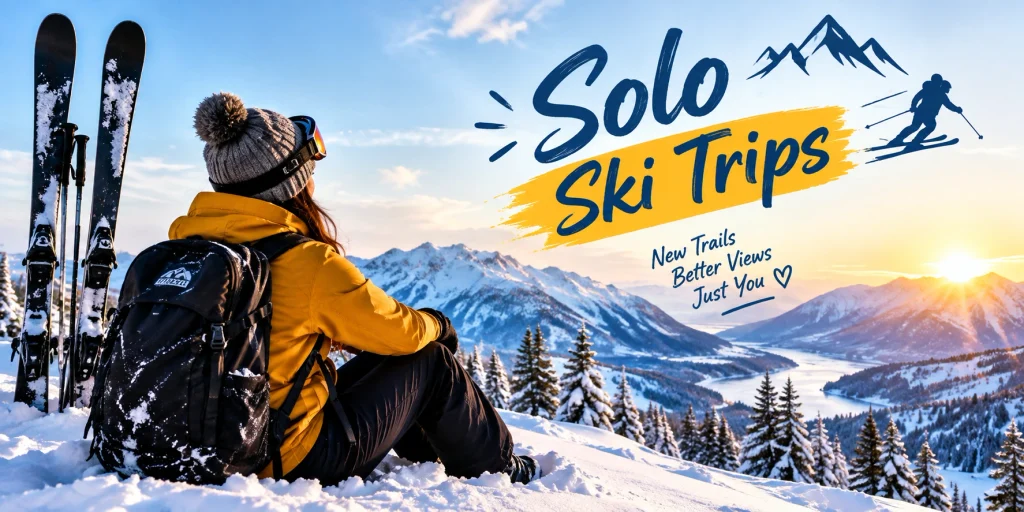
A solo ski trips provides absolute freedom over the day at hand. An early morning one day can be spent skiing while one evening may feature a late breakfast and only a few hours of skiing.
The idea may seem a little strange at first, especially if someone has never traveled alone. However, a ski resort is actually one of the easiest places to enjoy some time alone, with a variety of lessons, stores, restaurants, shuttles, mountain activities and other people who have come for the same reason: to enjoy the snow.
The key to planning this sort of trip is to plan it properly.
What Are Solo Ski Trips?
A solo ski trip is simply a ski vacation where one person travels without a regular travel partner.
The trip can range from as simple as driving a few hours to a nearby ski resort. Or, it can be as far fetched as flying across the country for a week in the mountains.
Some solo travelers spend almost the entire trip skiing. Others will use the opportunity to enjoy local food, sightseeing, winter activities, spa visits, hiking, or to simply relax at the hotel.
There is really no right or wrong way of doing it.
The best plan is to consider skiing ability, budget, available vacation days, and the type of winter experience desired. travelers solo and solo travel for beginners.

Why Do People Go Skiing Alone?
One of the key advantages of traveling alone is the freedom it provides.
There is no need to wait for someone else to get ready in the morning and there is no pressure to stick to a certain set of skiing plans for the day.
A beginner can spend extra time practicing easy slopes and an experienced skier can spend extra time exploring the terrain that matches his or her ability level.
There is also something relaxing about having a quiet morning in a mountain town.
After a busy week at work, a few days without meetings, group decisions, and everyday responsibilities can be a true escape.
Another benefit of solo ski trips is the flexibility.
Plans can easily change based on how people feel. A tired day can become a rest day and a sunny afternoon can allow extra time on the mountain. A snowy morning can easily replace a planned sightseeing day in a mountain town.
Are Solo Ski Trips Safe?
Safety should always be a concern of the planning process for skiing alone.
Skiing does present normal mountain risks that do not disappear because someone is traveling with friends. However, solo travelers do need to be a little more careful in their planning in case of an emergency since there is not a travel partner nearby.
Sticking to marked terrain within a person’s ability level is especially important.
Prior to heading on to the mountain, check the weather and the conditions and have a charged phone in a readily accessible location. It is also helpful to let a family member or friend know where the trip is taking place and where the accommodation is located.
Solo does not mean taking unnecessary risks.
There is nothing wrong with skipping a difficult run, taking a break, or ending the skiing day earlier than expected.
Is Skiing Alone Good for Beginners?
A first ski vacation can seem simpler with a lesson.
New skiers do not need to figure it out all on their own. Most major ski resorts offer lessons for beginners and group lessons can easily be a simple way to meet other people as well.
A professional instructor can explain basic skills such as:
How to control speed
How to stop
How to turn
How to use beginner lifts
How to get up after falling
How to choose suitable runs
Taking a lesson on the first day can make the rest of the trip much more enjoyable.
There is also no reason to compare skiing ability with others on the mountain. Everyone learns at a different speed.
How to Choose a Ski Resort for a Solo Trip
Choosing the right destination can be the difference between a good and a great time.
A resort with convenient accommodation, restaurants and transportation can be much more helpful for a solo traveler than a place where everything requires a car.
Before booking, there are a few things to consider.
Location
Consider how long it takes to get to the resort from the nearest airport or from home.
A destination that requires several complicated transfers may not be worth the extra hassle for a short vacation.
Accommodation
Look for hotels, lodges or rentals that are close to the ski area or with reliable transportation.
Ski Terrain
The mountain should have terrain suitable for the current skiing level.
A very large resort may sound exciting, but beginners may feel more comfortable at a destination with plenty of easy and intermediate terrain.
Things to Do After Skiing
This is easy to overlook.
Skiing usually ends in the afternoon, leaving several hours before bedtime. Restaurants, coffee shops, local stores, spas and other activities can make those hours more enjoyable.
Popular U.S. Destinations to Consider
The United States has many ski destinations and each has a different atmosphere.
Park City, Utah
Park City is known for its large ski area and historic mountain town. It can be a good choice for travelers who want skiing plus restaurants, shops and activities away from the slopes.
Winter Park, Colorado
Winter Park offers a mountain-focused experience with skiing and winter activities. It is also an option for travelers looking for a Colorado ski vacation without needing to plan every hour around skiing.
Mammoth Lakes, California
Mammoth is another destination worth considering for a western U.S. ski trip. The surrounding area provides restaurants, lodging and other winter activities.
Vermont
Vermont can be convenient for travelers living in the northeastern United States. Several ski resorts are located within driving distance of major cities in the region.
The right destination depends on travel time, budget, skiing ability, snow conditions, and personal preferences rather than simply choosing the most famous name.

How Many Days Are Enough for a Solo Ski Vacation?
Three to five days is a practical length for a first trip.
A three-day trip can provide enough time to travel, ski, rest, and enjoy the local area without making the vacation seem too long.
A five-day trip gives more flexibility.
For example:
Day 1: Travel and check into the hotel.
Day 2: Ski and take a lesson if needed.
Day 3: Spend most of the day skiing.
Day 4: Ski in the morning and explore the town later.
Day 5: Have breakfast, pack and travel home.
Longer trips can be useful for experienced skiers, especially with weather that may affect the mountain schedule.
Where Should Solo Skiers Stay?
Accommodation is one of the most important decisions on a solo ski vacation.
Staying close to the resort can be convenient because there is less transportation to worry about.
A hotel near the lifts may cost more, but the convenience can be valuable. After several hours of skiing, a short walk back to the room is much easier than driving a long distance.
Another option is staying near the town center.
This can provide easier access to restaurants and evening activities.
Budget travelers may also look at hostels or shared accommodations. Some ski towns have lodging where travelers can meet other visitors without paying for a large private rental.
Should Skis Be Rented or Brought From Home?
For occasional skiers, renting equipment is often easier.
Flying with skis can mean additional luggage, airport handling and transportation problems. Rental shops are usually located near major ski resorts and can provide skis, boots and poles.
Renting also makes sense for people who are still learning and are not yet ready to invest in their own equipment.
Skiers who already own comfortable, well-fitting equipment may prefer bringing their own gear.
The decision mainly comes down to convenience, cost and how often someone skis.
What Should Be Packed for a Solo Ski Trip?
Packing for cold weather requires a little more thought than packing for a normal vacation.
- Basic ski clothing includes:
- Waterproof ski jacket
- Ski pants
- Warm base layers
- Gloves or mittens
- Thermal socks
- Goggles
- Helmet
- Warm hat
- Neck warmer
- Sunscreen
- Lip balm
- Small backpack
- Water bottle
- Phone charger
Extra casual clothes are useful for evenings.
A small backpack can also carry water, snacks, sunscreen and an extra layer while skiing.
Do not forget that mountain weather can change quickly. Having an extra warm layer is better than spending the afternoon feeling cold.
How Much Do Solo Ski Trips Cost?
The cost largely depends on the destination and time of year.
The main expenses usually include:
Expense
What to Consider
Transportation
Flight, rental car, shuttle or fuel
Hotel
Location and number of nights
Lift Ticket
Prices can change by date and resort
Equipment
Rental skis, boots and poles
Lessons
Useful for beginners
Food
Restaurants, snacks and drinks
Insurance
Travel and activity coverage
Local Transport
Shuttle, taxi or public transportation
Holiday periods and popular winter weekends can be expensive.
Traveling during less busy dates may provide more accommodation choices and a different overall budget.
It is important to calculate the complete trip cost rather than just the hotel price.
Ways to Save Money on a Ski Vacation
Ski trips can become expensive quickly, but there are several ways to control the budget.
Booking accommodation early can help, especially at popular destinations.
Another option is staying slightly away from the main ski area if transportation is convenient.
Buying groceries for breakfast and snacks can also reduce daily food costs.
Equipment rental packages may be cheaper than renting each item separately.
Beginners can also compare lesson prices before booking. A group lesson may cost less than a private session.
Travel dates matter a lot. A trip during a busy holiday week can cost much more than a similar trip at another time.
How to Meet People During a Solo Ski Trip
Traveling alone does not mean being alone every minute.
Ski lessons are one of the easiest places to meet people because everyone already has a shared interest.
Group tours and resort activities can also create natural opportunities to talk with other travelers.
Après-ski areas are another common social spot. A simple conversation about the weather, snow conditions, or a favorite run can lead to meeting someone new.
There is also no need to turn the trip into a social event.
Some travelers enjoy having dinner alone, reading at a coffee shop, or simply relaxing after a long day outside.
The freedom to choose between social time and quiet time is part of the appeal.
What Can Solo Travelers Do After Skiing?
A ski resort is more than its slopes.
After the lifts close, there may still be plenty to do.
Depending on the destination, a solo traveler can:
Explore the local town
Visit a coffee shop
Try a local restaurant
Visit a spa
Shop for souvenirs
Watch a movie
Read at the hotel
Take a winter walk
Enjoy a quiet dinner
Join an evening resort activity
A good ski vacation should not feel like a race to ski every available minute.
Rest is important too.
What Is the Best Time for a Solo Ski Trip?
The best travel period depends on the destination and the type of snow experience wanted.
Early winter can provide the start of the ski season, but snow conditions vary.
Midwinter is often associated with stronger winter conditions, although weather and snow can change from one year to another.
Later winter and early spring can offer longer daylight and different mountain conditions.
Before booking, check the resort’s normal season dates and current operating information.
It is also smart to keep some flexibility in the schedule because mountain weather can affect lifts and roads.
A Simple First Solo Ski Trip Itinerary
A first trip does not need a complicated schedule.
Morning
Have breakfast and check the weather before heading to the mountain.
Late Morning
Start with runs that match the current ability level. Beginners can take a lesson.
Lunch
Take a proper break instead of skiing continuously until exhaustion.
Afternoon
Continue skiing or explore another suitable area of the mountain.
Evening
Return to the hotel, shower and change into comfortable clothes.
Then head into town for dinner or spend a quiet evening at the accommodation.
This type of schedule leaves room for changes. A mountain vacation should have some flexibility.
Common Mistakes on Solo Ski Trips
Booking a Hotel Too Far Away
Saving money on accommodation may not be worth it when transportation becomes difficult every day.
Trying Difficult Runs Too Soon
There is no prize for skiing terrain that is beyond the current skill level.
Forgetting About Rest
Skiing uses more energy than many people expect. Rest days or shorter ski days can make the overall vacation more enjoyable.
Ignoring the Weather
Mountain weather can change quickly. Checking conditions before leaving the hotel is a simple habit that can prevent problems.
Overpacking
Ski equipment already takes up space. Pack the important clothing and avoid bringing unnecessary items.
Planning Every Minute
A solo trip works best when there is some freedom. Leave room for a slow morning, unexpected weather, or a good local restaurant.
Solo Ski Trips for Women
Solo ski travel can also be a comfortable option for women who want a winter vacation without waiting for a group.
The same basic safety habits apply.
Choose accommodation with good reviews and convenient access to transportation. Keep important documents and valuables secure, especially during travel.
For evening activities, stay aware of surroundings and use reliable transportation.
Group lessons and organized resort activities can also provide a comfortable way to meet other travelers.
The goal is not to remove every small risk from travel. Good planning simply makes the trip easier and more comfortable.
Solo Ski Trips for Experienced Skiers
Experienced skiers have more freedom when traveling alone.
A full day can be spent exploring different parts of the mountain without trying to match another person’s pace.
However, advanced ability does not remove mountain risks.
Weather, visibility, terrain and fatigue still matter.
A solo skier should avoid taking unnecessary risks simply because there is no one else around to slow the day down.
A smart trip is one that ends with good memories rather than an avoidable problem.
Is a Solo Ski Vacation Lonely?
It can be quiet, but quiet and lonely are not always the same thing.
Some people enjoy having breakfast alone, riding a lift without conversation and spending a